Key takeaways
- Borscht is a sour soup with many regional variations, not always red or made with beets.
- The most famous version, Ukrainian borscht, is a hearty, beet-based soup often served with sour cream and pampushky.
- Key ingredients can include beets, cabbage, potatoes, carrots, meat (beef, pork, chicken), and a souring agent like kvass or vinegar.
- Different countries, like Poland (barszcz) and Russia, have their own distinct styles, some even served cold or clear.
- Don't be afraid to ask about ingredients or check an app like MenuDish to see real photos and details before ordering.
Borscht: More Than Just Beets (Sometimes, Not Even Beets!)
When most people hear “borscht,” they think of the crimson masterpiece from Ukraine. And for good reason: Ukrainian borscht, with its rich beet base, hearty vegetables, and often chunks of meat, is arguably the most famous iteration. But the truth is, borscht is a whole family of sour soups, originating from Eastern Europe and stretching across Russia, Poland, Belarus, Lithuania, and beyond.
Historically, the word 'borscht' comes from an old Slavic word for hogweed, a plant whose fermented stems were once used as the souring agent. Beets were later introduced and eventually became the star in many regions, but the core concept of a sour, often vegetable-heavy soup remained. This means you might encounter a 'green borscht' made with sorrel, or a 'white borscht' with a rye flour base, or even a clear, beet-free broth served with dumplings, depending on where you are.
The Heart of Ukrainian Borscht: A Culinary Hug in a Bowl
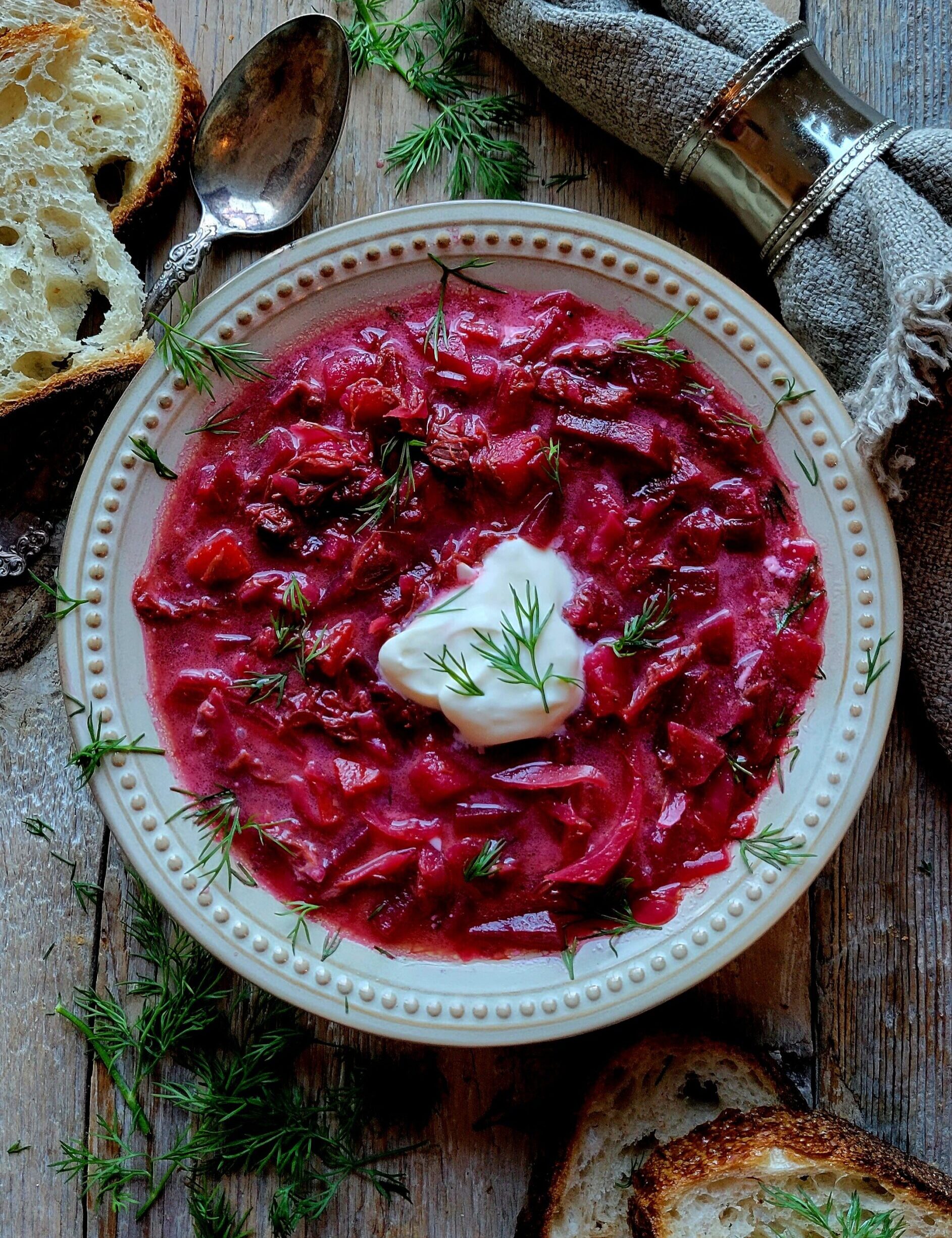
Let's talk about the big one: Ukrainian borscht. This isn't just a soup; it's a meal, a tradition, and a symbol of national pride. A proper Ukrainian borscht is a symphony of flavors and textures. It starts with a rich broth, often made with beef or pork. Then come the vegetables: beets (of course), cabbage, potatoes, carrots, onions, sometimes beans, and even bell peppers. The beets are often sautéed or roasted to bring out their sweetness, and a touch of vinegar or lemon juice is added to brighten the flavor and preserve that iconic deep red color.
It's typically served piping hot, garnished generously with fresh dill and a big dollop of smetana (sour cream). Don't be surprised if it comes with pampushky – small, garlicky bread rolls – perfect for soaking up every last drop. It’s comforting, complex, and utterly satisfying, especially on a chilly day.
Regional Twists and Turns: Beyond the Red Bowl
Venture beyond Ukraine, and borscht takes on new forms:
- Polish Barszcz: In Poland, barszcz can be a clear, vibrant beet broth, sometimes served hot in a mug with small mushroom dumplings (uszka) for Christmas Eve. There's also a more substantial 'white barszcz' (żurek), made with fermented rye flour and often served with sausage and hard-boiled eggs.
- Russian Borscht: While similar to Ukrainian versions, Russian borscht often features a wider variety of vegetables and can be served with a piece of meat on the side rather than in the soup itself.
- Cold Borscht (Chłodnik): A refreshing summer variant, particularly popular in Lithuania, Poland, and Belarus. It's a vivid pink soup made with fresh beets, cucumbers, dill, and kefir or buttermilk, served chilled with hard-boiled eggs.
- Green Borscht: This version, common in Ukraine and Russia, skips the beets entirely and instead uses sorrel, spinach, or other leafy greens for its characteristic tangy flavor and green hue. It’s often served with eggs and sour cream.
Each variation tells a story of local ingredients and culinary traditions. It's a reminder that food is rarely monolithic.
Ordering Like a Pro: What to Expect and How to Ask
When you see borscht on a menu, especially outside of Ukraine, it’s always a good idea to check the description. Is it hot or cold? Does it contain meat? Are there specific vegetables mentioned? If the description is sparse, a quick question to your server can save you from a surprise.
And if you're traveling abroad and the menu is completely in a foreign language, don't fret. This is exactly where an app like MenuDish shines. You can scan the menu, get instant translations, and even see real dish photos that other diners have shared. It's a fantastic way to know exactly what kind of borscht you're about to enjoy before it even arrives at your table, ensuring you get that perfect, comforting bowl you're craving.
The Taste Experience: Tangy, Savory, and Deeply Satisfying
Regardless of the specific type, borscht offers a unique flavor profile. The dominant taste is often a balance of earthy sweetness from the beets (in the red versions) and a pleasant tanginess from the souring agent. This acidity cuts through the richness, creating a wonderfully complex and refreshing soup. You'll taste layers of savory depth from the broth and vegetables, often enhanced by herbs like dill or parsley. The texture can range from chunky and hearty to smooth and velvety, depending on the preparation.
It's a soup that warms you from the inside out, evokes a sense of home, and genuinely satisfies. If you haven't tried it, or have only had one variation, it's time to explore the wonderful world of borscht.
Don't cook it — find it.
See every dish on any menu before you order. Scan, see the photo, check allergens & nutrition.