Key takeaways
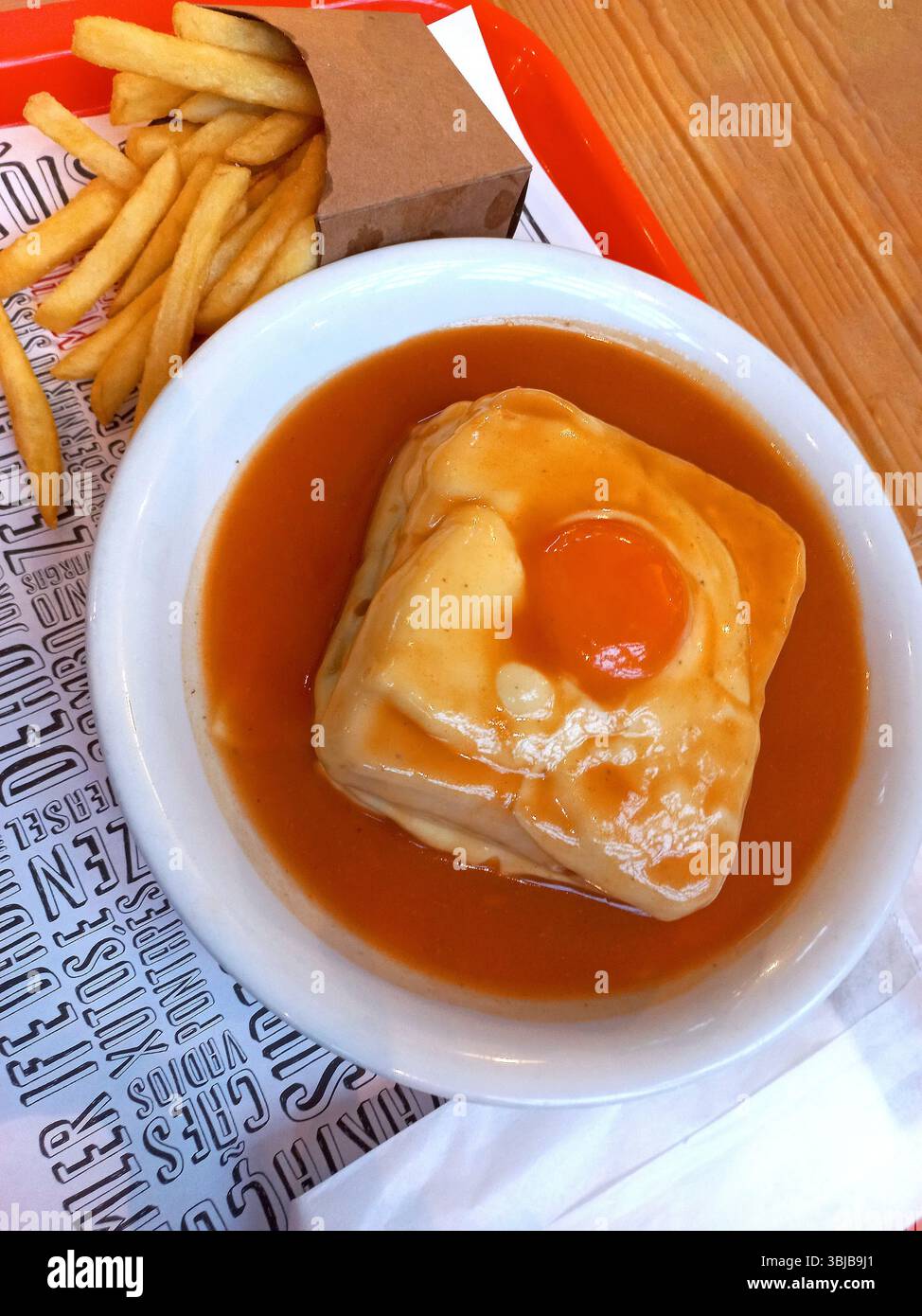
- A Francesinha is a wet Portuguese sandwich stacked with meats, melted cheese, and a fried egg, submerged in a spicy beer and tomato sauce.
- The secret sauce varies by restaurant, usually built on beer, port wine, beef stock, tomato, and piri-piri chili.
- Always order fries with your Francesinha—they are essential for soaking up the leftover sauce.
- It is always eaten with a knife and fork, never with your hands.
The anatomy of Porto's most famous dish
The name Francesinha translates to 'Little French Girl,' but there is nothing delicate about this sandwich. Inspired by the French croque monsieur, Portuguese native Daniel da Silva brought the concept to Porto in the 1950s after returning from France. He adjusted the recipe to suit northern Portuguese palates, swapping delicate ham for local sausages, adding a steak, and smothering the whole thing in a sharp, alcoholic sauce.
A proper Francesinha starts with two thick slices of white bread, lightly toasted so they do not instantly dissolve under the wet heat. Inside, the layering is deliberate: sliced cured ham, garlicky linguiça sausage split down the middle, fresh pork sausage (salsicha fresca), and a thin, pan-seared beef steak. The entire stack is wrapped in thick slices of mild Edam or Flamengo cheese, baked until melted, and finished with a fried egg.
Why the sauce makes or breaks the sandwich
If the meats are the structure, the sauce is the soul. Every cervejaria (beer hall) in Porto keeps its precise sauce formula strictly under lock and key. The base remains fairly consistent across the city: beef broth, tomato paste, garlic, and a heavy splash of draft beer. Most cooks also add Port wine or brandy, along with a dash of piri-piri chili to give the finish a gentle throat kick.
The result is a silky, savory gravy with a noticeable tangy kick that cuts through the rich fat of the cheese and meats. Some sauces lean heavily toward beer and chili, while others carry a sweeter, richer wine character. If you run out of sauce halfway through your meal, simply ask the server for mais molho (more sauce)—most kitchens will bring out a small stainless steel jug free of charge.
How to order and eat one like a local
When looking at a tavern menu in Porto, you will notice options for a standard Francesinha and a Francesinha com ovo e batata (with egg and fries). Skipping the egg and fries is widely considered a tactical error. The thick-cut french fries are piled around the sandwich in the sauce pool, absorbing the gravy while staying surprisingly crisp on top.
Never attempt to pick up a Francesinha with your hands. You will receive a heavy serrated knife and fork. Start by piercing the egg yolk so it runs into the top layer of cheese, then slice straight down through the center to get a sample of every layer in a single bite. Wash it down with an icy glass of local draft beer or a chilled, crisp Vinho Verde.
Understanding menu variations and dietary restrictions
Modern Portuguese menus now list several Francesinha variations. A Francesinha Poveira uses a crusty baguette instead of sliced bread. Some casual spots swap the beef steak for roasted chicken breast or turkey, while coastal spots might feature a seafood spin with prawns.
For vegetarian diners, finding a meatless version used to be impossible, but dozens of spots in Porto now make plant-based options using smoked seitan, mushrooms, and soy-based sausages. If you are sitting down at a local tavern and want to know what a dish actually looks like before ordering, tapping a quick camera scan in MenuDish matches menu text with real dish photos and highlights allergens so you never accidentally order a plate overflowing with sausage when you wanted mushrooms.
Don't cook it — find it.
See every dish on any menu before you order. Scan, see the photo, check allergens & nutrition.
Allergens: Gluten, Dairy, Eggs, Sulphites. The MenuDish app flags these automatically for every dish it scans.