Key takeaways
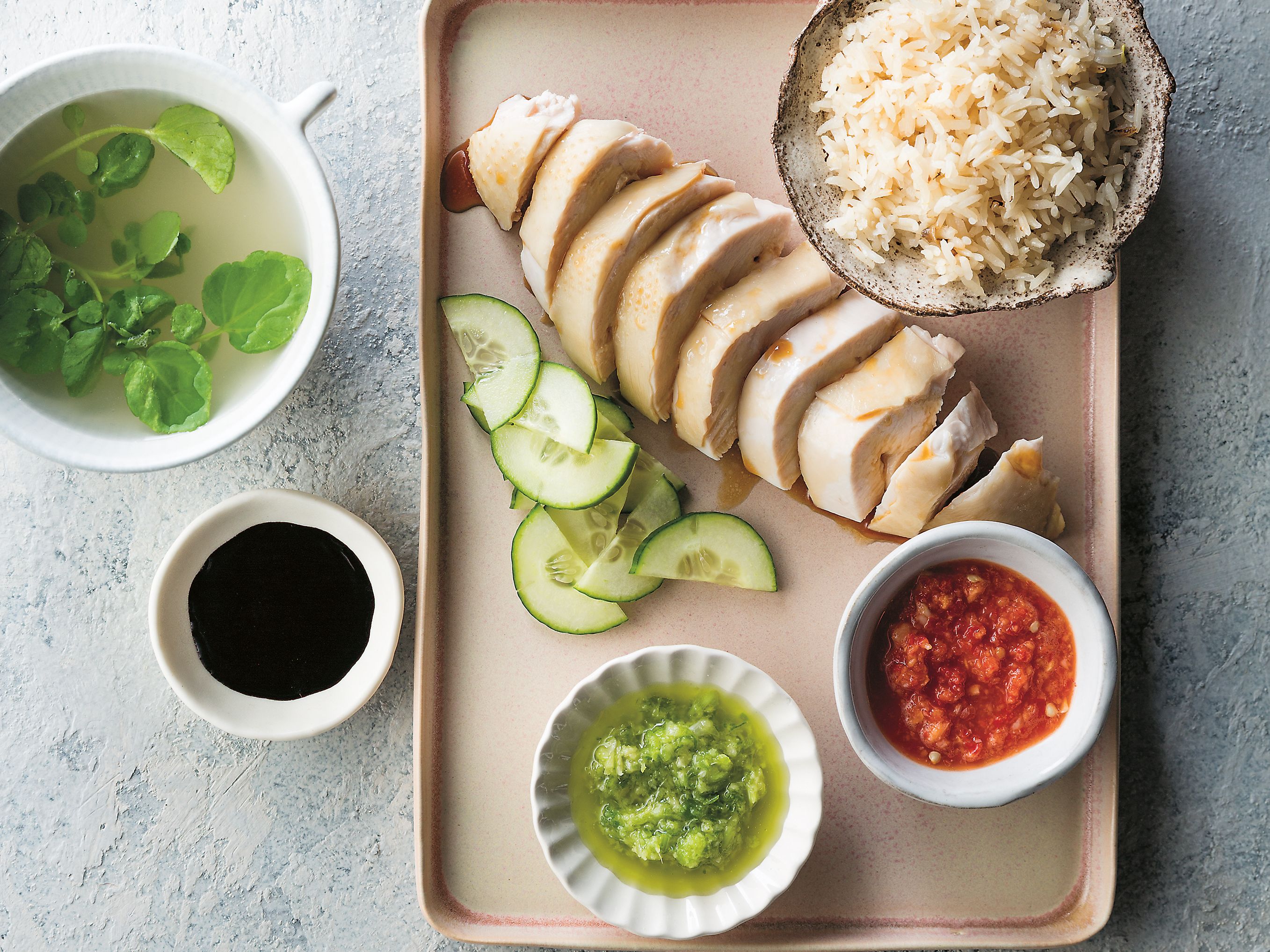
- Hainanese chicken rice uses poached chicken shocked in ice water to create a silky, gelatinous layer beneath the skin.
- The rice is fried in rendered chicken fat and aromatics before simmering in stock with tied pandan leaves.
- Three essential condiments—chili sauce, ginger paste, and thick sweet dark soy sauce—complete the meal.
- Hawker stalls offer options between white (poached) chicken and roast chicken, along with specific cuts like drumstick or thigh.
From Hainan island to Singapore hawker stalls
The dish traces its ancestry back to Wenchang chicken from Hainan Island in southern China, where islanders poached local poultry and served it with rice cooked in broth. When Hainanese immigrants settled in Southeast Asia during the early 20th century, they adapted the dish using local chicken breeds and fragrant pandan leaves, turning it into a cornerstone of Singaporean hawker culture.
The cooking process demands disciplined temperature control. Chefs poach whole chickens in sub-boiling broth seasoned with ginger and scallions. The instant the meat cooks through, the chicken is plunged into an ice water bath. This rapid chill gelatinizes the skin, locking in juices and keeping the meat extraordinarily tender.
Why the rice matters even more than the chicken
In Singapore, a stall reputation rests on its rice. Plain steamed white rice simply will not do. Before cooking, raw jasmine rice is toasted in rendered chicken fat alongside smashed garlic, minced shallow ginger, and green scallion roots.
That rice then steams in the rich broth left over from poaching the chicken, along with bruised pandan leaves knotted together. The output is glossy, savory grains that carry a subtle floral aroma without turning slick or heavy.
The three condiments you should never skip
Every plate comes with three distinct dipping sauces, each adding a necessary layer of flavor to the gentle poached meat:
- Fresh Chili Sauce: Tangy and bright, made from fresh red chilis, garlic, lime juice, and hot chicken stock.
- Ginger Paste: Finely grated fresh ginger beaten with oil and salt to provide a sharp, clean finish.
- Dark Sweet Soy Sauce: Viscous, caramel-like soy sauce that provides deep savory sweetness.
Local custom varies: some diners mix ginger and chili into their rice, while others coat each piece of chicken with dark soy sauce before dipping it into the red chili.
Deciphering the menu options at the stall counter
Walking up to a stall menu can feel confusing if you are unfamiliar with the terminology. You will usually choose between white chicken (poached, served at room temperature with silky skin) and roast chicken (deep-fried or roasted with crisp, dark brown skin).
You can also choose meat cuts. Requesting ji tui gets you a juicy drumstick, while ji xiong specifies lean breast meat. Sides often include soy-braised hard-boiled eggs, chicken liver, or bok choy tossed in oyster sauce.
When reading printed hawker menus or ordering on your phone, opening the MenuDish app lets you scan dish names to view matched photos of real plates along with ingredient lists, so you know exactly which chicken cut you are selecting.
How to make Hainanese chicken rice at home
Replicating Hainanese chicken rice in your own kitchen takes patience with chicken fat and temperature, but the steps are surprisingly straightforward. Follow the recipe below for a full home preparation.
Ingredients you'll need
4 servings · 1 hour 15 minutes
- 1 whole chicken (around 3.5 lbs / 1.6 kg)
- 3 inches fresh ginger, peeled and sliced
- 6 cloves garlic, smashed
- 4 scallions, cut into finger-length pieces
- 2 cups jasmine rice, thoroughly rinsed
- 2 fresh pandan leaves, tied into a knot
- 2 tbsp sesame oil
- 2 tbsp vegetable oil or rendered chicken fat
- 1 tbsp coarse sea salt
- Ice water bath
How to make it (step by step)
Scrub the outside of the chicken with coarse salt to clean the skin, then rinse thoroughly inside and out.
Stuff the chicken cavity with half of the sliced ginger, three smashed garlic cloves, and scallions.
Bring a large pot of water to a rolling boil, lower the chicken breast-side down, reduce heat to a low simmer, cover, and cook gently for 40 minutes.
Lift the chicken out carefully and immerse it immediately in an ice water bath for 10 minutes. Drain, dry, and brush the skin with sesame oil.
In a skillet over medium heat, fry the remaining garlic and ginger in chicken fat or vegetable oil for 2 minutes, then stir in rinsed jasmine rice until glossy.
Transfer the rice to a rice cooker or pot, add chicken poaching broth in place of water, insert the pandan leaves and a pinch of salt, and cook.
Slice the cooled chicken into pieces and serve over warm chicken rice alongside sliced cucumber, chili sauce, ginger paste, and dark soy sauce.
Don't cook it — find it.
See every dish on any menu before you order. Scan, see the photo, check allergens & nutrition.
Nutrition (per portion)
| Calories | 670 kcal |
| Protein | 39 g |
| Carbohydrates | 61 g |
| Fat | 27 g |
Allergens: Soy, Sesame. The MenuDish app flags these automatically for every dish it scans.