Key takeaways
- Mole is a family of complex Mexican sauces, not a single dish, with hundreds of regional variations.
- The most famous moles are Mole Poblano (often contains chocolate, nuts, chiles) and Mole Negro (darkest, richest, from Oaxaca).
- Key ingredients include various chiles, spices, nuts, seeds, fruits, and often chocolate, ground together to form a thick paste.
- Moles are labor-intensive, often simmered for hours, and served with poultry, pork, or as a base for enchiladas (enmoladas).
- When ordering, don't be afraid to ask about the specific mole's flavor profile – some are sweet, some smoky, some fiery.
Mole is More Than a Sauce, It's a Legacy
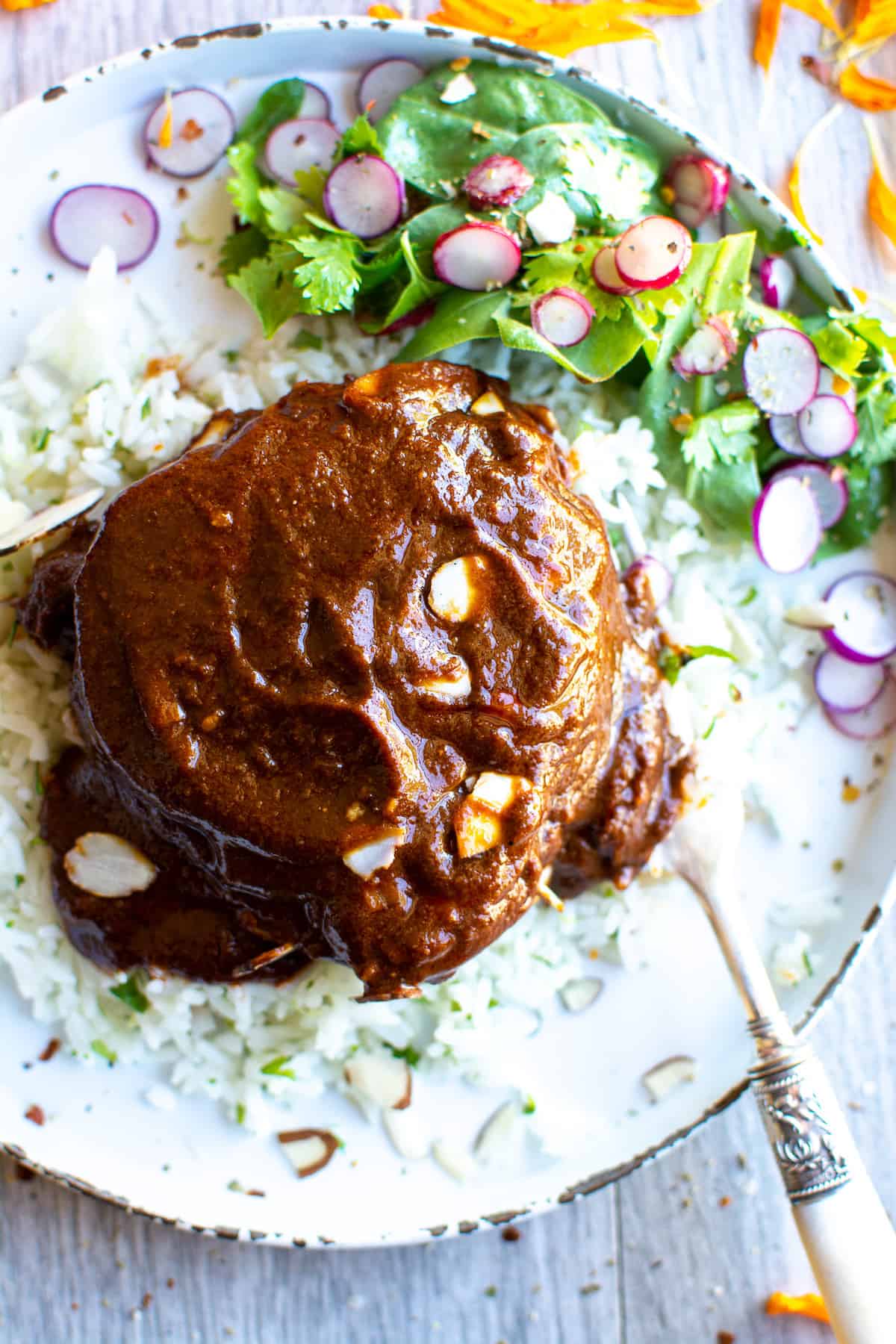
Forget everything you think you know about simple sauces. Mole (pronounced MOH-lay) is a thick, intensely flavored concoction, often containing dozens of ingredients. Its origins stretch back centuries, a culinary bridge between Indigenous traditions and Spanish colonial influences. Each region, sometimes even each family, has its own cherished recipe, passed down through generations.
At its heart, mole is about balance. It’s the meticulous grinding of dried chiles – usually several varieties – with spices, nuts, seeds, fruits, vegetables, and sometimes even a touch of chocolate or masa. This isn't a quick pan sauce; a true mole can take days to prepare, with ingredients toasted, rehydrated, ground on a metate (grinding stone) or in a blender, then slowly simmered for hours until it reaches a velvety, profound depth.
The Heavyweights: Mole Poblano and Mole Negro
If you're new to mole, you'll most likely encounter two titans: Mole Poblano and Mole Negro. Both are dark, rich, and utterly captivating, but distinct in their character.
Mole Poblano: The National Treasure
Hailing from the state of Puebla, Mole Poblano is arguably the most famous. Its ingredient list is staggering: ancho, mulato, pasilla, and chipotle chiles; nuts like almonds and peanuts; seeds like sesame and pumpkin; spices such as cinnamon, cloves, and anise; fruits like raisins; and yes, often a significant amount of dark chocolate. But don't expect a dessert sauce! The chocolate isn't for sweetness but to add bitterness, depth, and a glossy sheen, balancing the heat of the chiles and the richness of the other ingredients. It’s savory, smoky, with a subtle underlying sweetness and a satisfying warmth.
Mole Negro: Oaxaca's Dark Heart
From the 'Land of Seven Moles,' Oaxaca, comes Mole Negro. This is the darkest, richest, and often the most complex of all moles. It shares many ingredients with Mole Poblano but typically includes chilhuacle negro chiles, which are notoriously difficult to find outside of Oaxaca. The chocolate content is often higher, and it's frequently thickened with a touch of plantain or bread. The result is an almost inky black sauce, intensely smoky, with notes of dried fruit, nuts, and a profound, lingering warmth. It’s a truly unforgettable experience.
Beyond the Dark: Other Moles to Explore
While Poblano and Negro are the most famous, Oaxaca alone boasts several others, and many more exist across Mexico. Keep an eye out for these:
- Mole Coloradito: A reddish-brown mole, often milder than its dark counterparts, with a sweet and slightly spicy profile, featuring plantain and a lighter touch of chocolate.
- Mole Amarillo: A vibrant yellow or orange mole (despite 'amarillo' meaning yellow), thickened with masa and often featuring tomatillos and serrano chiles, giving it a tangier, brighter kick.
- Mole Verde: A fresh, herbaceous green mole, typically made with tomatillos, epazote, cilantro, parsley, and green chiles like jalapeños or serranos. It's lighter and brighter, often served with pork or chicken.
- Mole Rojo: Similar to Coloradito but often spicier and redder, relying on a blend of red chiles.
- Mole Chichilo: Another Oaxacan specialty, a dark and smoky mole made with charred chiles and thickened with masa.
Each offers a unique journey for your palate, showcasing the incredible diversity of Mexican regional cooking.
Ordering Mole Like a Pro
When you see mole on a menu, don't hesitate. It's a dish meant to be savored. Most often, mole is served with chicken or turkey, allowing the sauce to be the star. You might also find it as enmoladas (enchiladas smothered in mole) or with pork. Here's how to approach it:
- Ask Questions: If the menu just says “mole,” ask your server what kind it is. Is it Poblano? Negro? Verde? What's its general flavor profile – sweet, smoky, spicy, herbaceous?
- Expect Richness: Mole is a deep, complex sauce. It's not light fare. Savor each bite with rice and warm tortillas, which are perfect for soaking up every last drop.
- Don't Fear the Chocolate: Remember, the chocolate in savory moles is for depth, not dessert. It balances the chiles and spices beautifully.
If you're still unsure about the specific ingredients or what a dish actually looks like, that's where an app like MenuDish can come in handy. You can scan the menu and see real dish photos, along with ingredient lists and allergens, so you can order with confidence, knowing exactly what's arriving at your table.
Don't cook it — find it.
See every dish on any menu before you order. Scan, see the photo, check allergens & nutrition.