Key takeaways
- Pozole is a traditional Mexican stew built around nixtamalized corn kernels (hominy) and slow-cooked meat.
- It comes in three regional styles named after broth colors: Rojo (red dried chilies), Verde (green herbs and fresh peppers), and Blanco (clear pork or chicken stock).
- Toppings like shredded cabbage, sliced radishes, oregano, lime, and tostadas are essential components added at the table.
- Pork shoulder and head cuts are most traditional, though chicken and mushroom versions are increasingly common.
Hominy is the star, not just filler
At first glance, pozole looks like a standard meat stew. Take a bite, though, and you immediately notice giant, puffy white kernels that taste earthy, nutty, and distinctly buttery. That’s nixtamalized corn, known in Mexico as cacahuazintle or hominy in English.
Nixtamalization is an ancient Mesoamerican culinary process where dried field corn is cooked and soaked in an alkaline bath, usually diluted lime water. This strips away the outer hull, softens the grain, and causes the kernels to swell up until they blossom like popcorn in broth. The process frees up essential nutrients and transforms humble corn into a hearty, deeply aromatic anchor for the dish.
Rojo, Verde, or Blanco: Pick your bowl
Pozole comes in three primary colors matching the Mexican flag, each defined by its broth base and chili profile.
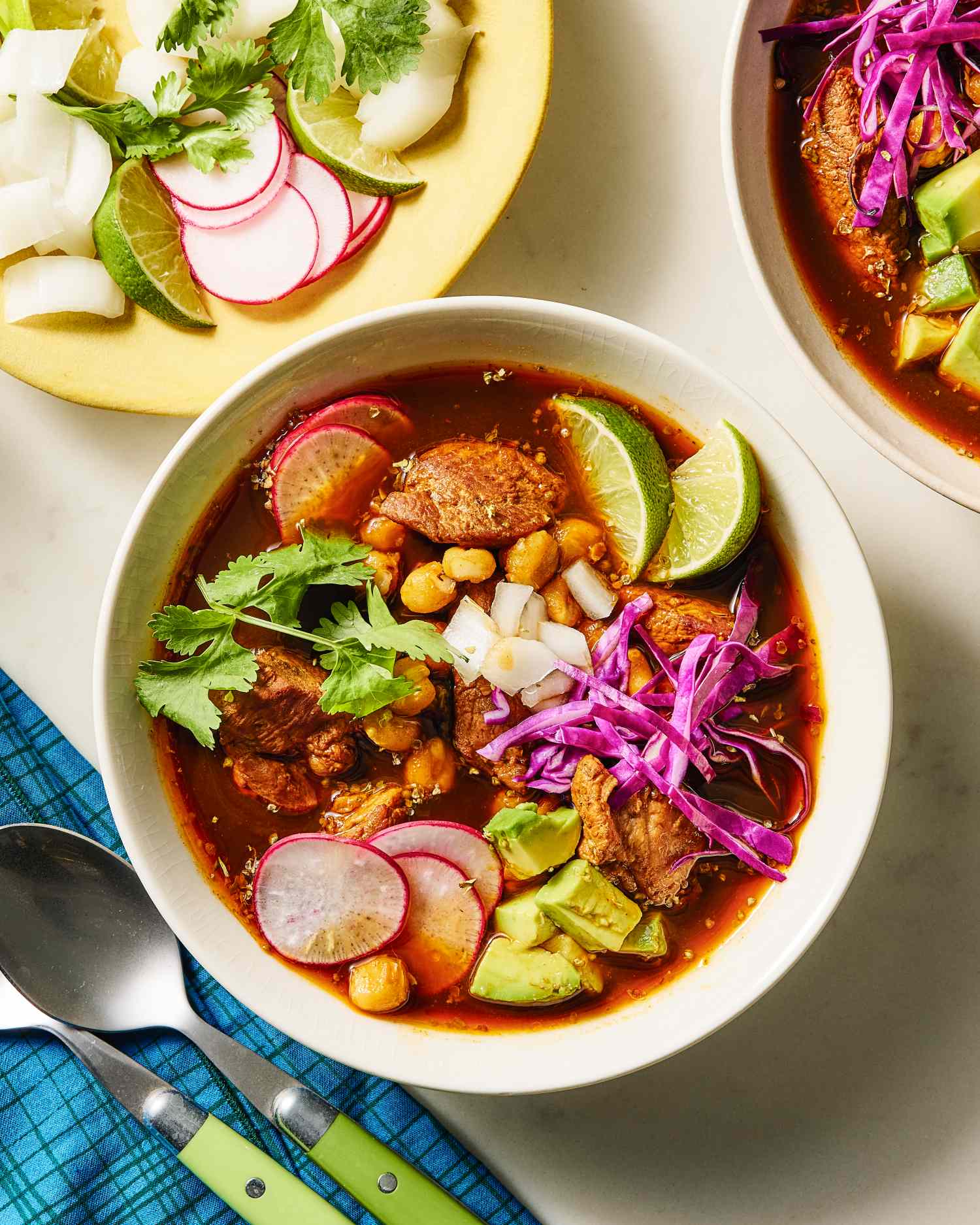
Pozole Rojo gets its deep crimson hue and smoky heat from blended dried chilies—typically guajillo and ancho. It is rich, slightly sweet from the chilies, and remains the most popular version across Jalisco and central Mexico.
Pozole Verde hails from the state of Guerrero and relies on fresh green ingredients: roasted poblano peppers, jalapeños or serranos, tomatillos, toasted pumpkin seeds (pipián), and fresh cilantro. It tastes brighter, tangier, and distinctly herbal.
Pozole Blanco skips chili purees in the pot entirely. The broth relies purely on pork shoulder, head, or chicken simmered for hours with garlic and onions. Diners season their own bowl at the table using fiery red table salsas, chili flakes, and lime juice.
Why toppings aren't optional garnishes
When your bowl arrives, it usually comes accompanied by a platter stacked high with fresh produce and condiments. Treating these as optional decorations is a mistake; pozole is meant to be finished at the table so every bite has a contrast of hot and cold, rich and crisp.
A standard setup includes paper-thin radish slices, shredded green cabbage or lettuce, finely diced raw white onion, dried Mexican oregano rubbed between your palms, crushed chile de árbol, and plenty of lime wedges. Beside the bowl, expect crisp corn tostadas, often served plain or smeared with a thin layer of cream or crumbled queso fresco. Stirring the raw vegetables into the boiling broth softens them slightly while keeping a distinct crunch.
Pork, chicken, or seafood options
Pork is the traditional standard for pozole. Slow-cooking cuts like pork shoulder, neck bones, and shank releases collagen into the liquid, giving the soup its body and rich mouthfeel. Many traditional specialty spots, or pozolerías, also include pork head or trotter cuts for extra depth.
Shredded chicken breast and thigh (pozole de pollo) offers a lighter alternative that lets the green or red chili broth shine. Along coastal regions like Guerrero and Colima, you'll even find pozole de mariscos loaded with shrimp, clams, and fish.
If you're looking at a handwritten daily menu and aren't sure which meat option a spot offers, an app like MenuDish lets you scan the physical menu to quickly check ingredients, dietary tags, and matched photos of dishes before ordering.
Ordering tips for your first visit
Pozole carries serious social weight in Mexico. It is historically a celebratory feast served at birthday parties, weddings, New Year's Eve, and national holidays. Many traditional eateries only simmer big batches on specific days—keep an eye out for signs advertising 'Jueves de Pozole' (Pozole Thursdays) or weekend specials.
Start with a medium portion, as bowls tend to be generous. Squeeze your lime early, sprinkle a generous pinch of oregano, add a handful of cabbage and radishes, and use the tostadas to spoon up individual kernels of hominy alongside the tender meat.
Don't cook it — find it.
See every dish on any menu before you order. Scan, see the photo, check allergens & nutrition.
Allergens: Pork, Corn. The MenuDish app flags these automatically for every dish it scans.