Key takeaways
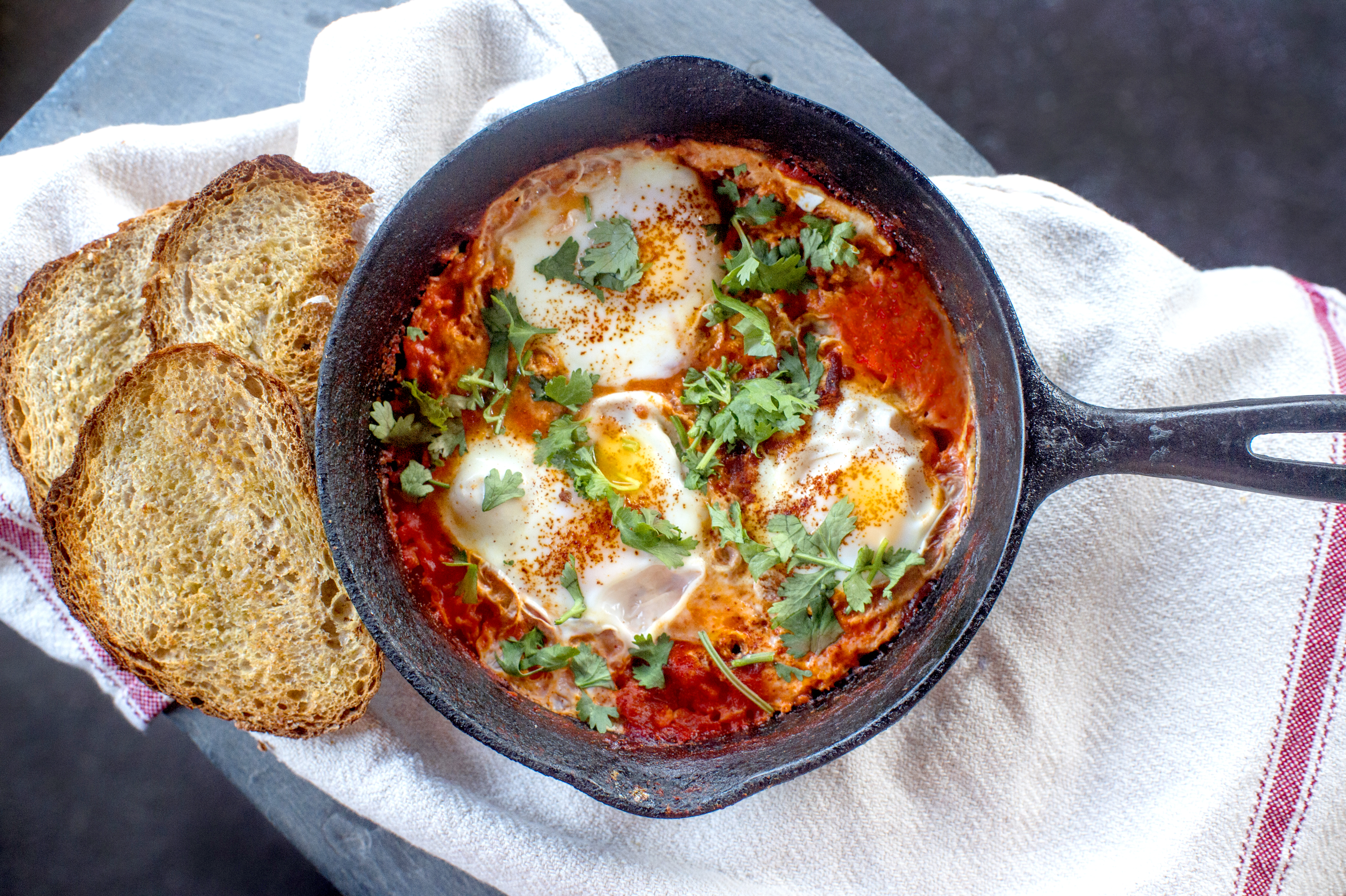
- Shakshuka is a pan-cooked dish of eggs gently poached in a simmering sauce of ripe tomatoes, bell peppers, onions, garlic, and warm spices.
- It originated in North Africa before spreading across Israel, Palestine, Turkey, and the wider Mediterranean region.
- The hallmark of a great shakshuka is a thick, concentrated red sauce paired with soft, runny egg yolks made for dipping.
- Crusty bread like pita, challah, or sourdough is essential for scooping up the sauce and yolk together.
What actually goes into a classic shakshuka sauce
At its core, shakshuka comes down to patience with aromatics. Sweet red bell peppers and yellow onions get cooked down in olive oil until soft and slightly caramelized, followed by crushed garlic, ground cumin, smoked paprika, and often a pinch of caraway seed. Chopped tomatoes join the pan, simmering until the liquid reduces into a thick, concentrated sauce rather than a loose soup.
Once the red pepper and tomato base holds its shape, small wells are scooped into the sauce. Fresh eggs are cracked directly into those hollows. The pan is covered just long enough for the egg whites to set opaque while the yolks remain completely liquid and rich.
From North African kitchens to global brunch menus
The word shakshuka comes from Maghrebi Arabic, roughly translating to 'a mixture' or 'shaken together.' Tunisian and Algerian Jewish communities brought the dish to Israel in the mid-twentieth century, where it evolved from a modest home meal into an essential national staple served inside pitas, skillet pans, or alongside fresh challah loaves.
Different regions lean into distinct accent spices. In Tunisia, harissa chili paste provides a sharp, smoky heat. Turkish menemen trades soft poached eggs for soft scrambled ones folded directly into tomatoes and green peppers. In Yemen, cooks often add zhug, a vibrant green cilantro-jalapeño hot sauce drizzled over top just before serving.
How to eat shakshuka without ruining the yolk
Shakshuka is an interactive meal. If a restaurant brings your cast-iron skillet to the table, leave the fork aside for a moment. Take a piece of thick sourdough, pita, or challah, press into a yolk until it breaks into the hot tomato sauce, and scoop up both in a single bite.
Salty, creamy toppings like crumbled feta or labneh help balance the acidity of cooked tomatoes. If you let the skillet sit too long without eating, residual heat from the cast iron will keep cooking those yolks, turning them firm within a couple of minutes.
How to spot the good stuff on a menu
Not every pan of red sauce and eggs is created equal. Quick-service spots sometimes pour canned marinara into a dish and drop cold poached eggs on top, leaving a bland, separate layer of watery liquid around the edges. Genuine shakshuka requires time for peppers to break down so their natural sweetness cuts through tomato tartness.
When brunch menus start listing unfamiliar Mediterranean toppings or green tomato variations, telling dishes apart gets tricky. A quick scan with MenuDish displays real photos of menu items matched from photo databases, so you can check if a dish is a traditional red sauce skillet or a fiery green herb spin before ordering.
Don't cook it — find it.
See every dish on any menu before you order. Scan, see the photo, check allergens & nutrition.
Allergens: Eggs, Milk (when topped with feta or yogurt). The MenuDish app flags these automatically for every dish it scans.